

- Listed here
- 14 systems
- Combined
- 520 kWh
- Settings
- Residential and industrial
- Status
- All in service
Installations
Real systems, real sites, running today.
Every system on this page was designed, built and commissioned by Upcycle Energy and is operating now. They are shown by capacity and location; customer names are withheld. Photographs are in place for ten of the fourteen; the remainder follow shortly.
These are friendly-user installations. Every one is with someone who chose to back the second-life idea early and who wanted a part in proving it out. They get capacity at a price the market does not offer; we get an honest critic on the end of the phone and, now, close to two years of continuous operating data from half the fleet.
Coexistence
Two of these run alongside a battery that was already there.
Adding a second battery to a home is usually a replacement job, because two independent systems read each other's charging as household demand and end up cycling against one another. Upcycle systems run a cooperative control algorithm that coordinates with the incumbent battery instead: the existing system is left exactly as installed, ours works around its behaviour, and total usable capacity goes up safely with no conflict between the two.
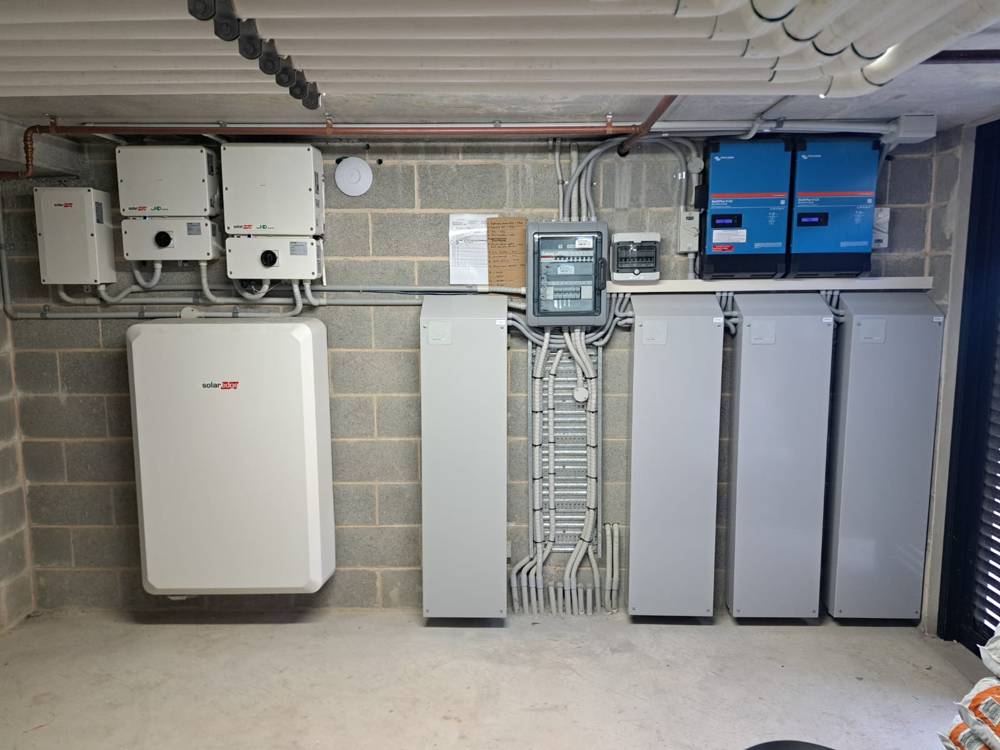
Four Upcycle cabinets and paired inverters installed beside the home's existing SolarEdge battery, visible at left. Both systems operate; neither interferes with the other.
Alongside an existing SolarEdge battery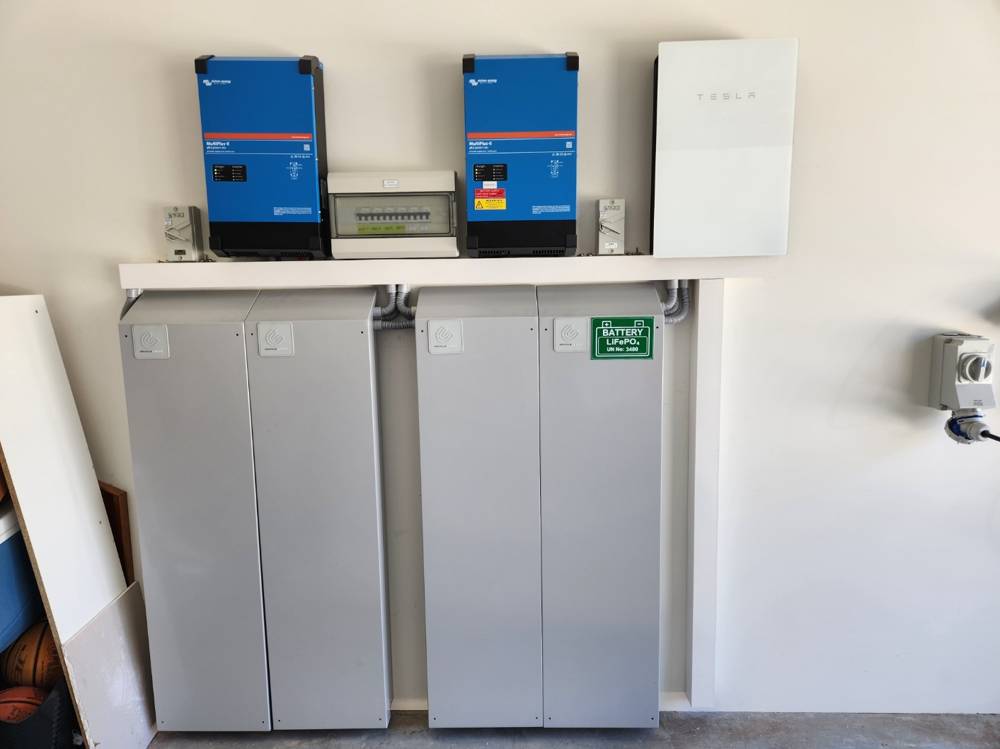
Four cabinets and paired inverters running beside the home's Tesla Powerwall, at right. The Powerwall keeps its own control; the Upcycle system schedules around it.
Alongside an existing Tesla PowerwallThe fleet
Fourteen systems, 10 kWh to 80 kWh.
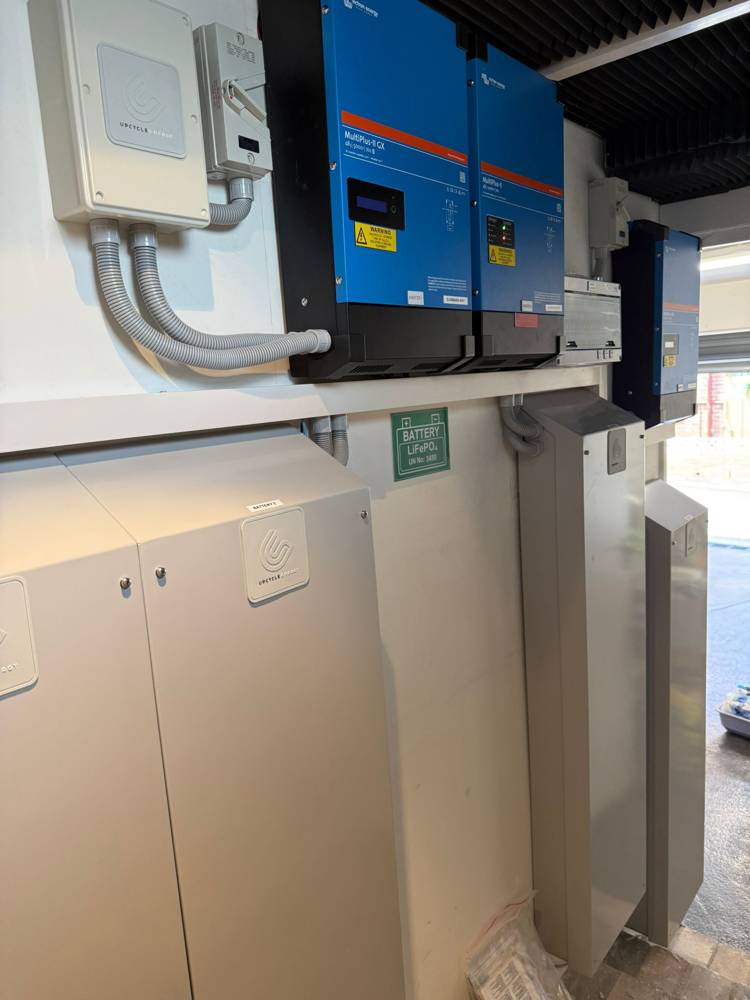
Our largest residential deployment. Eight cabinets on paired inverters in a single-garage footprint, feeding a high-consumption inner-city household.
Largest residential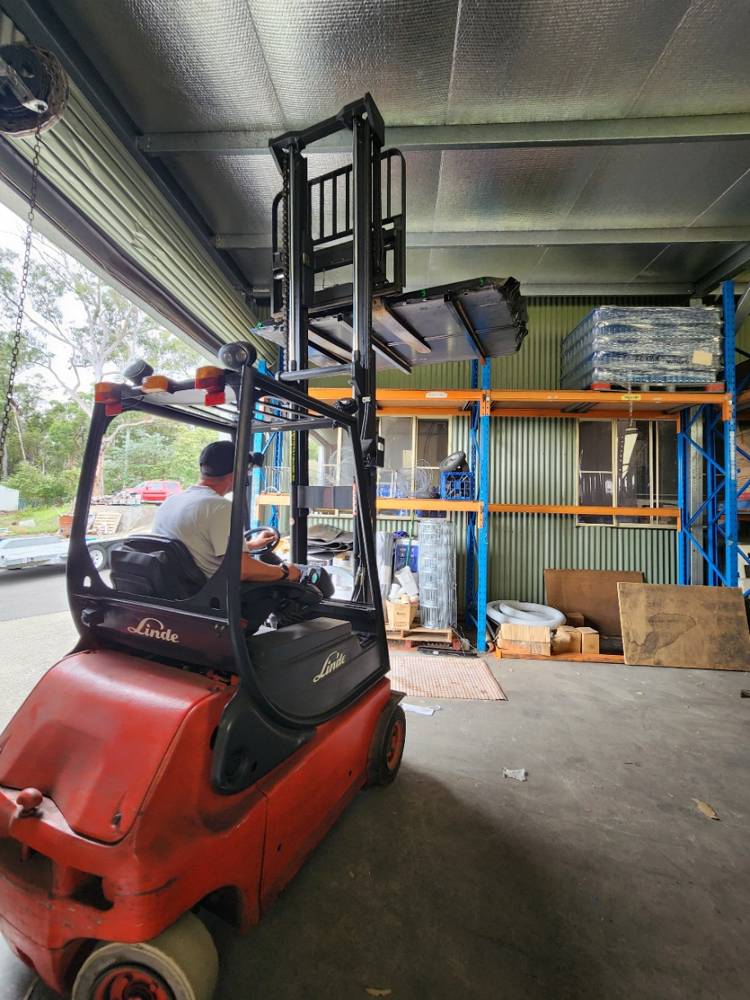
Industrial deployment on the semi-rural fringe, where grid reliability is the constraint rather than energy cost. Delivered by trailer and placed by forklift.
Industrial site
Six cabinets on paired inverters, one of the larger residential systems in the fleet and a step up from the 40 kWh configuration on the same street.
Good photo to be added shortly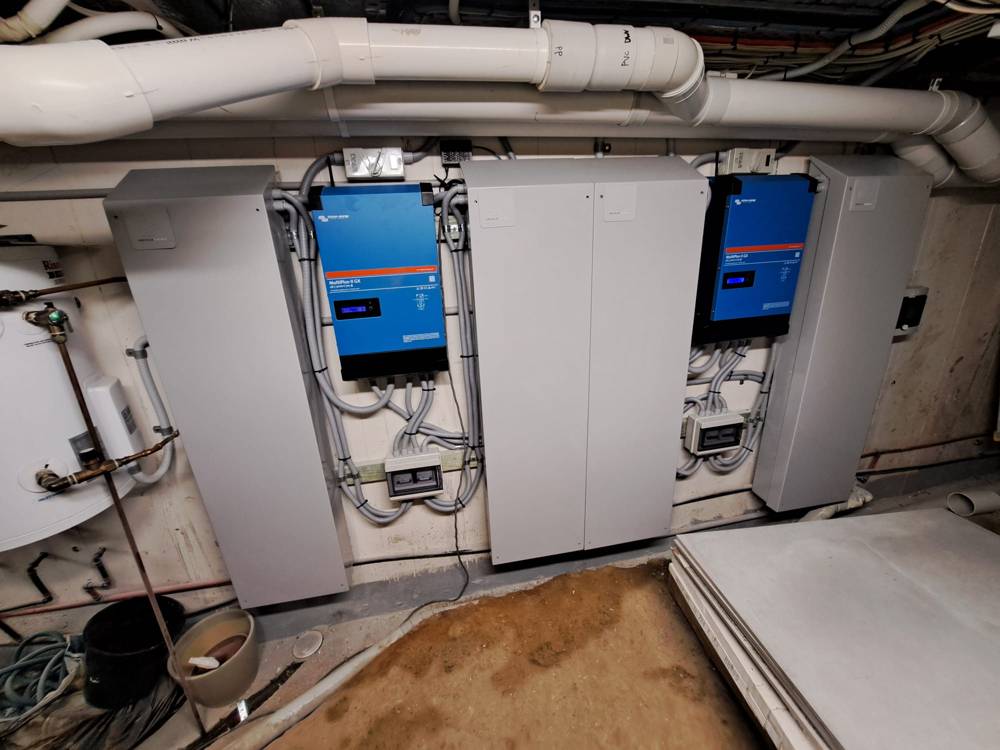
Basement installation with paired inverters and a dedicated subboard, sited to keep the cabinets clear of the parking area and within reach of the switchboard.
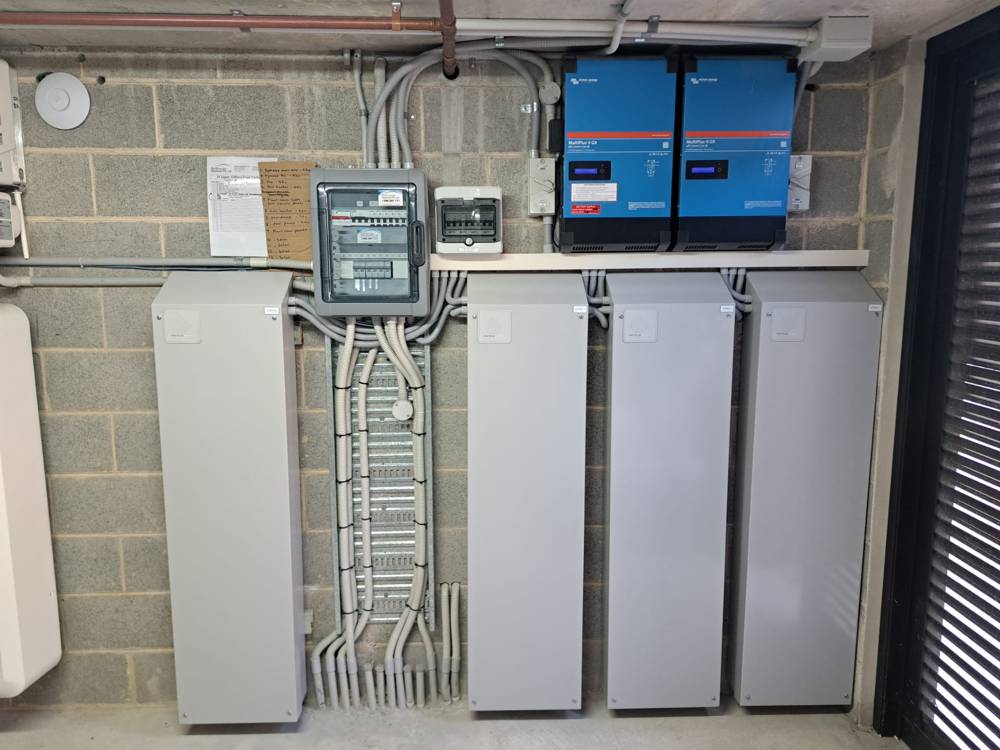
Four cabinets, two inverters and full metering on a garage wall. The same site also carries an existing SolarEdge battery, coordinated by our control algorithm.
Coexists with existing battery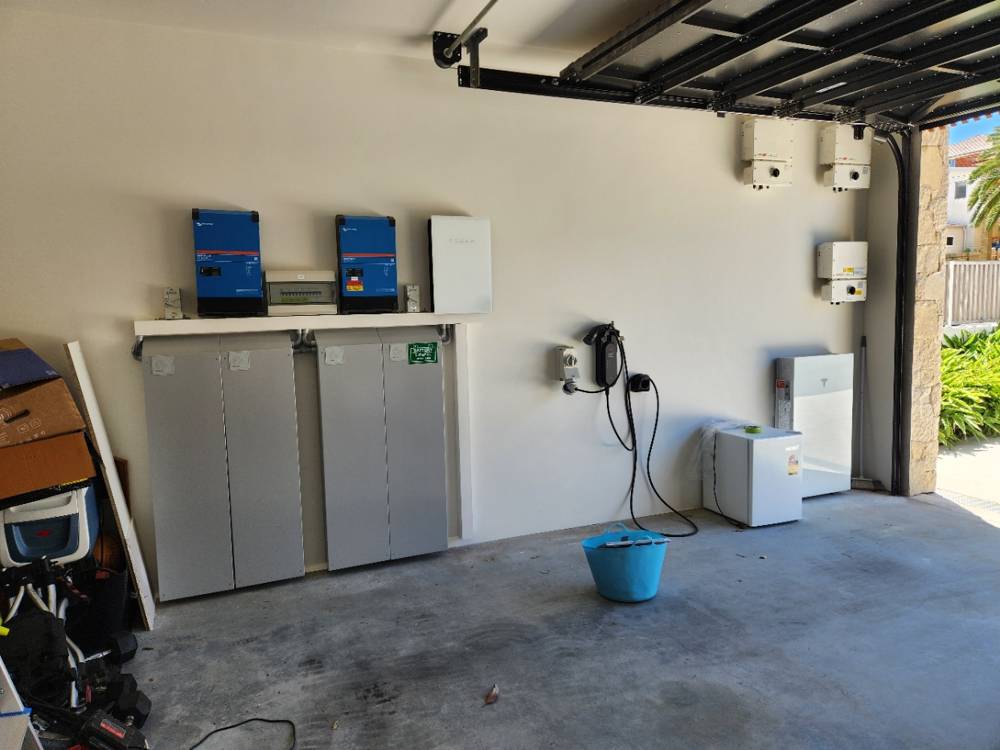
Shelf-mounted inverters over four cabinets, sharing the garage with an EV charger and the home's existing Tesla Powerwall.
Coexists with existing battery
A second Dee Why deployment on a separate site, four cabinets with paired inverters retrofitted to existing rooftop solar.
Good photo to be added shortly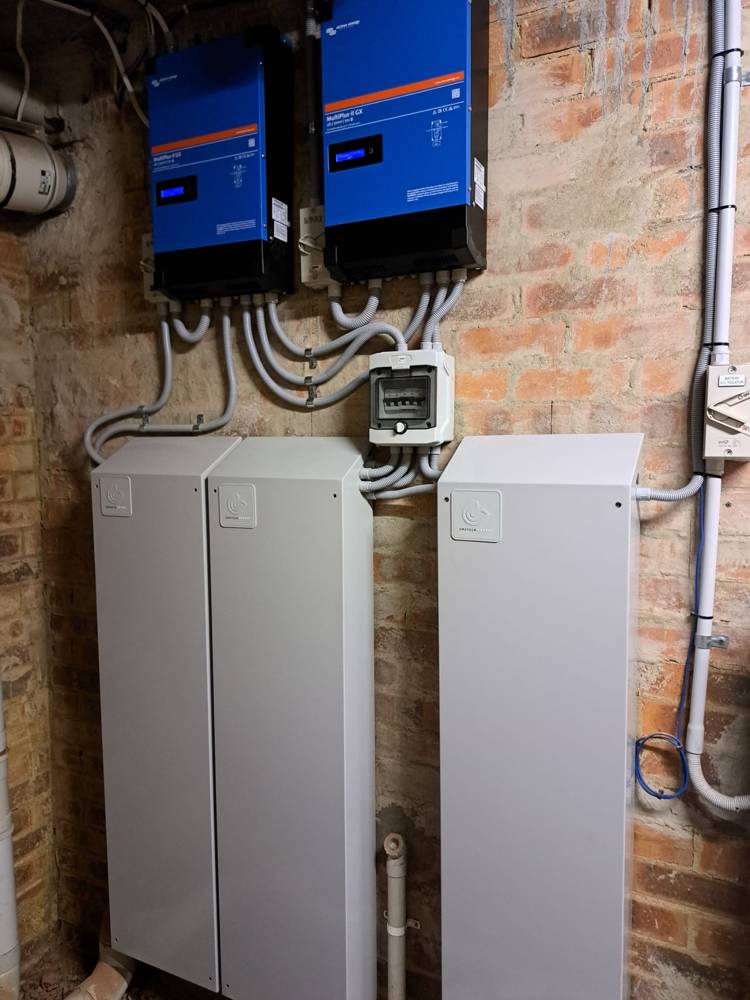
Three cabinets and paired inverters mounted on brickwork under the house, an example of the 10 kWh modular expansion in practice.
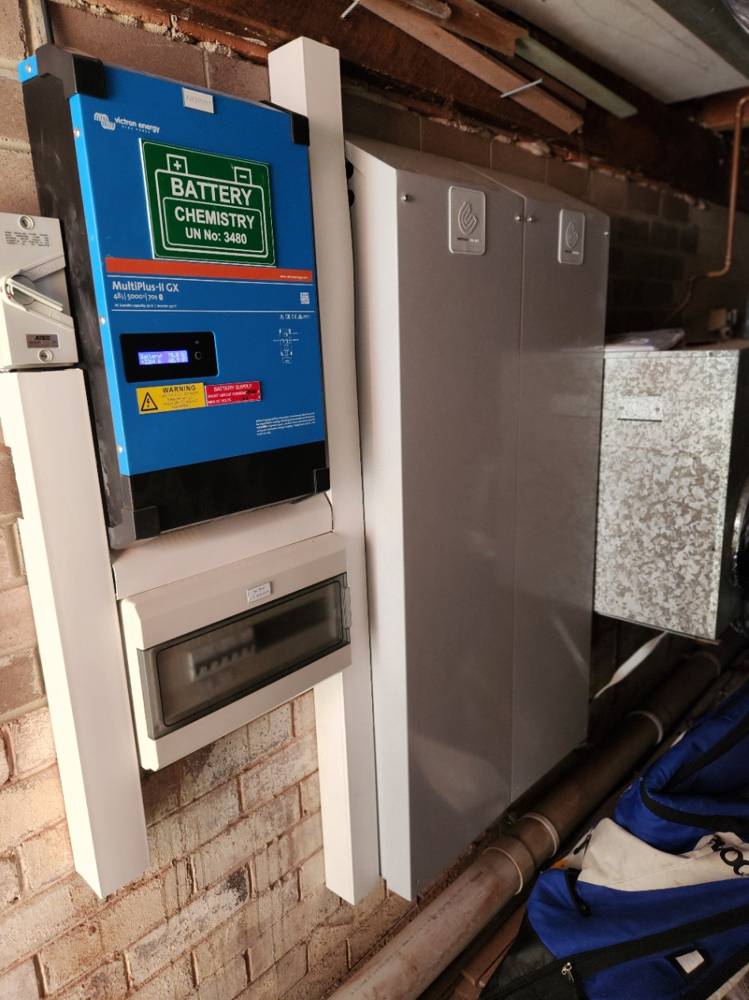
Entry-level system with a dedicated subboard and UN 3480 battery chemistry labelling — the standard configuration for a retrofit to existing solar.
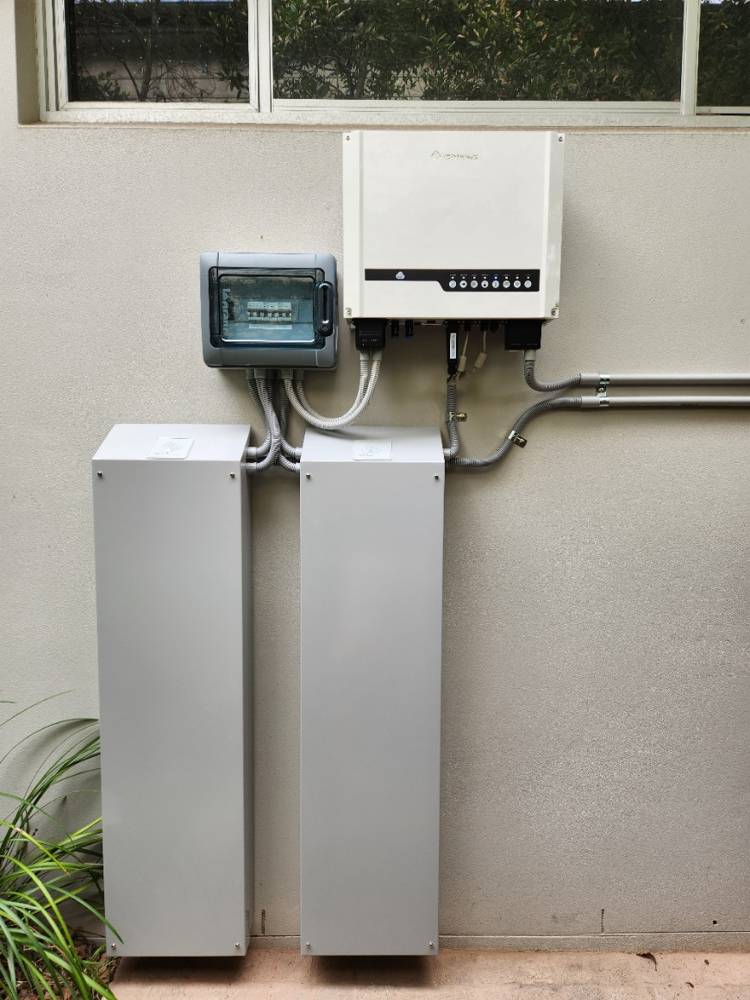
Externally sited cabinets where no internal space was available, with weather-rated mounting and monitoring alongside the inverter.
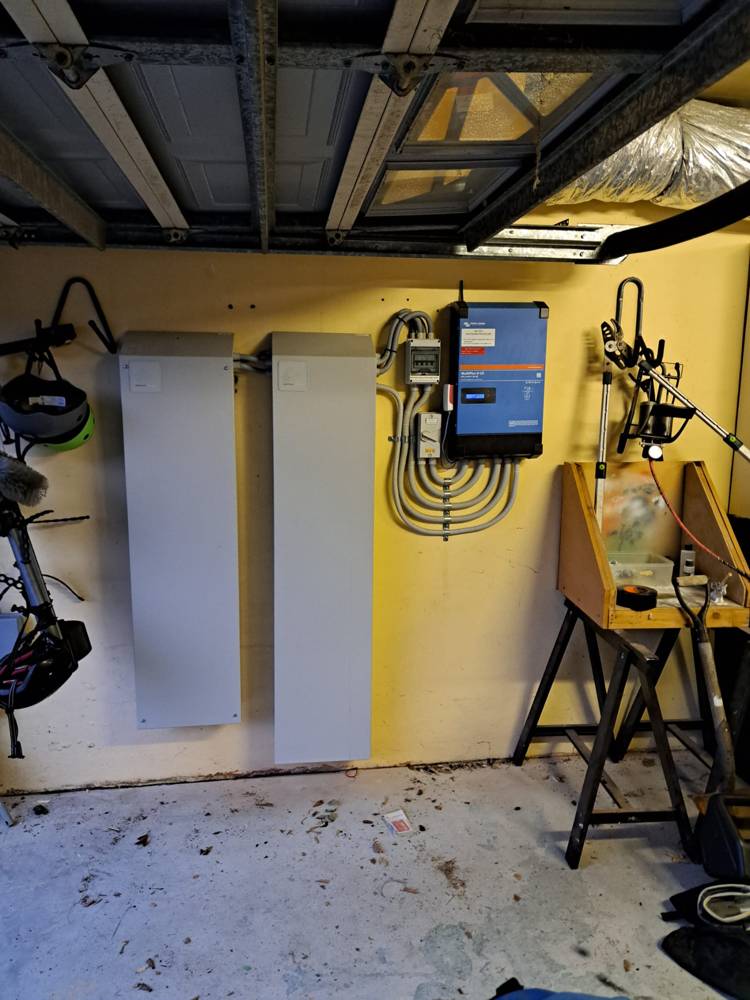
Under-house installation in a working space, with cabinets set clear of the bench and cabling routed overhead.
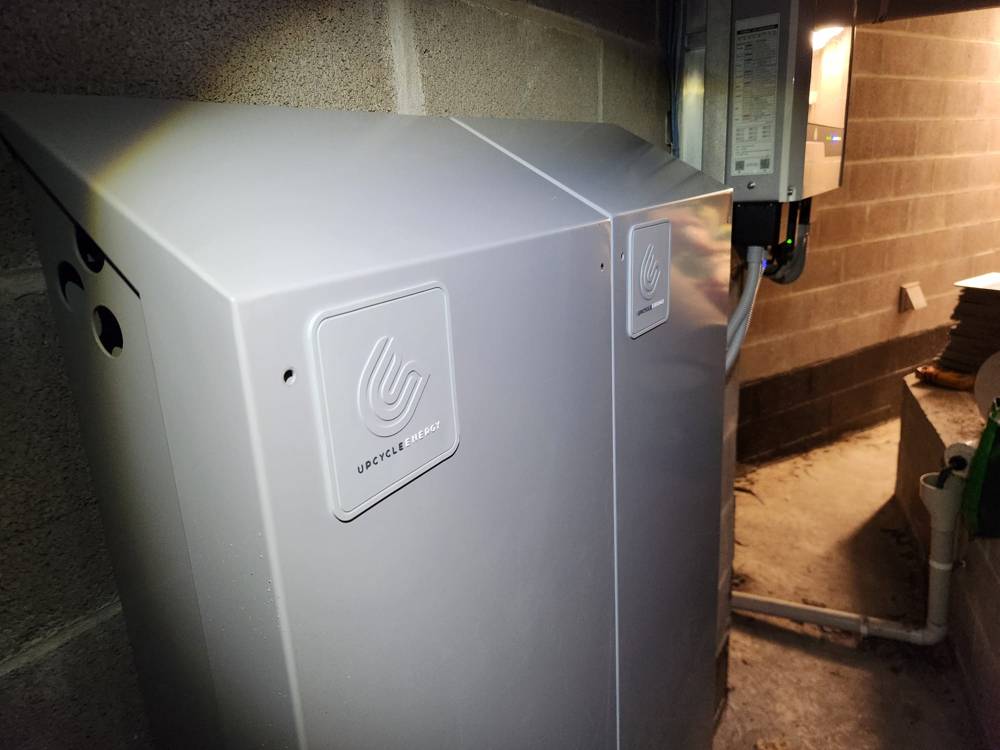
Single-cabinet system in a tight subfloor space, with isolation and protection mounted directly above the enclosure.
Two-cabinet system retrofitted to an existing rooftop solar installation, on the standard entry configuration.
Good photo to be added shortly
The smallest system in the fleet — a single cabinet on one inverter, and the configuration the modular 10 kWh expansion steps build from.
Good photo to be added shortly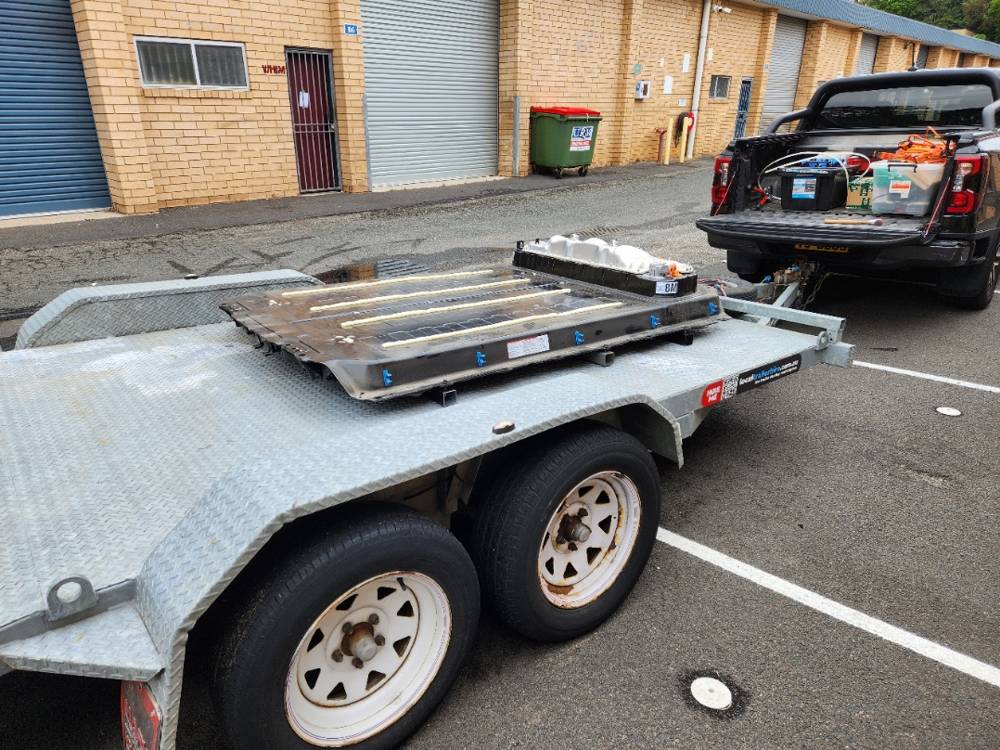
Packs move under the Australian Dangerous Goods Code as UN 3480 consignments, with the required documentation, packing and placarding.
Getting there
Delivery is part of the engineering.
A lithium battery on a public road is a dangerous goods consignment, not freight. Transport is planned with the same care as the installation: correct classification, documentation and placarding, licensed handling, and a delivery method matched to the site's access — trailer and forklift for a workshop, flat-bed and Hiab for a five-tonne pod.