

Solutions
Storage sized for the job, from a garage to a tower site.
One battery platform, five ways to buy it. The cells, the battery management, the enclosure design and the provenance discipline are common to all of them — what changes is the scale, the power conversion equipment and the service wrapped around it.
Backup Power as a Service Pod
A complete storage plant in a new 10ft high-cube container: up to six full EV traction packs on a transport-rated frame, DC distribution and current-limiting protection, stackable three-phase power conversion equipment, automatic transfer switching, thermal management and an autonomous controller. A small rooftop and wall solar array covers the pod's own housekeeping load rather than exporting.
It sits behind the meter and in parallel with the existing supply, so the site's grid connection does not change. Two duties matter most to industrial customers: long-duration backup, measured in days rather than hours, and peak-load reduction — buffering short, expensive demand peaks so a connection upgrade can be deferred, downsized, or bridged while a long-lead-time upgrade is built.
Where a site has several tenants behind one connection, each is metered independently and balanced by a single coordinated energy manager, so one shared investment serves all of them without becoming a new single point of failure.
360 kWh (LFP)
Transportable power unit
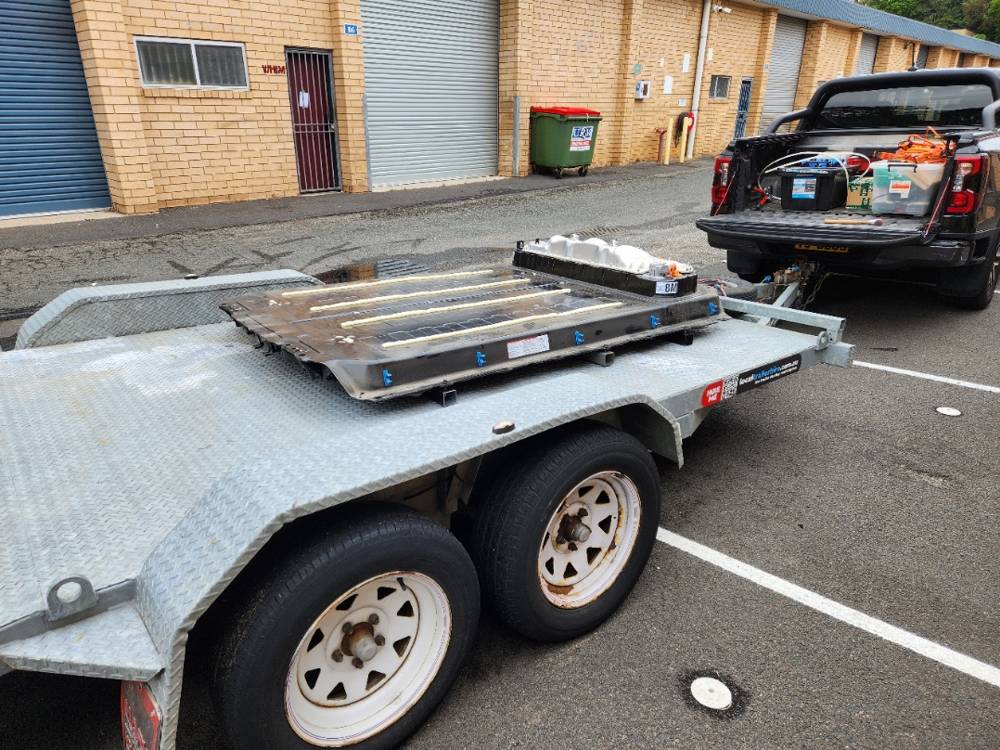
A trailer-mounted battery plant that goes where the power is needed. Up to 160 kWh of stored energy and up to 60 kW of instantaneous power, delivered through a safe and resilient three-phase inverter configuration. It is towed in, positioned, connected and running — no fuel, no exhaust, no noise.
It suits the jobs a generator does badly. Special events where noise and fumes are unacceptable and the audience is standing next to the plant. Worksites with no convenient grid connection, or where a temporary connection would cost more than the job is worth. Remote and short-duration sites where a permanent supply cannot be justified.
Because it is an uninterruptible supply rather than a standby set, the load does not see a transfer gap when conditions change — which matters when what is plugged into it is a sound desk, a medical tent or a control system rather than a floodlight.
Commercial & industrial BESS
Cabinet-mounted systems for workshops, warehouses, farms, multi-dwelling sites and small industrial loads. Built from the same graded packs, sized from 10 kWh and expanded in 10 kWh increments, with inverter capacity added in matched steps. Designed to retrofit alongside existing solar, existing switchboards and existing backup arrangements rather than replace them.
Systems operate autonomously against a site's own tariff and load shape — self-consumption, time-of-use shifting, or exposure to wholesale spot pricing where the customer's retailer allows it. Our largest single deployment to date is 80 kWh.
Residential BESS
The product the company started with, and still the proving ground for everything else. A system from 10 kWh that retrofits to existing rooftop solar, using a Clean Energy Council registered inverter and Upcycle battery cabinets. Larger homes run three or four cabinets on paired inverters, up to 80 kWh.
Where a home already has a battery, our cooperative control algorithm lets an Upcycle system run alongside it rather than replacing it — proven in service next to both a SolarEdge battery and a Tesla Powerwall.
Second-life systems are not currently eligible for battery rebate schemes. We are open with customers about that, and we are working with partners on the certification pathway that would change it.
Energy monitoring & analytics
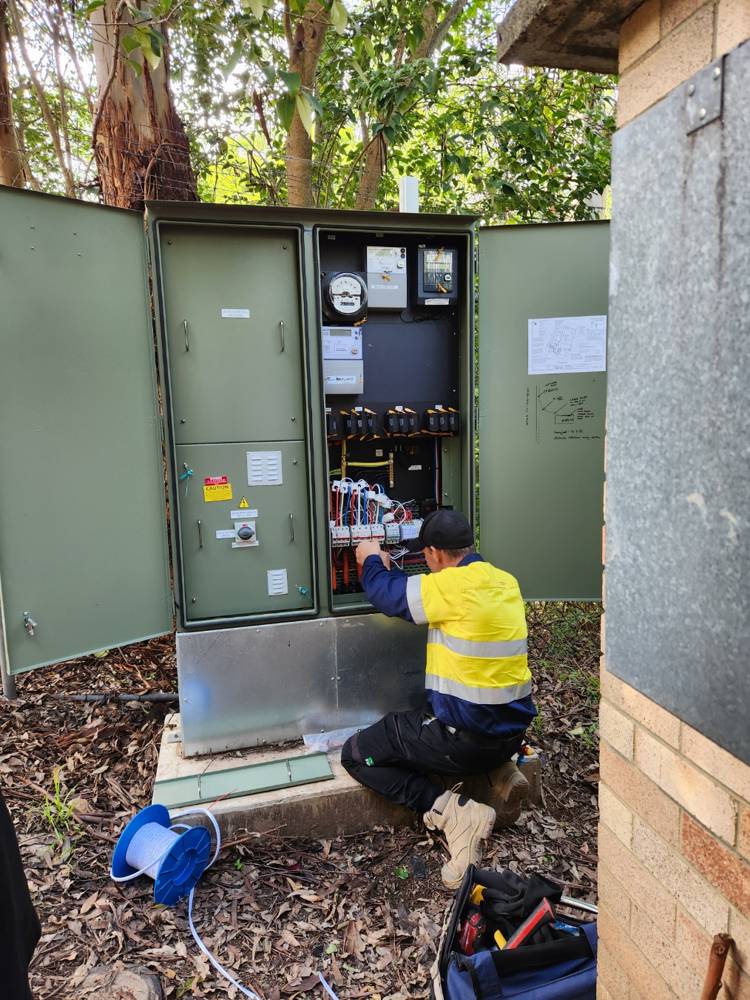
A standalone service, and the one we recommend a large customer start with. Non-invasive metering equipment is installed at the switchboard — no outage, no change to the site's electrical arrangement — and streams per-tenant power, power factor and apparent power at 2-second granularity over a secure dual-SIM mobile link. Roughly 200 MB per site per week is collected, stored and analysed.
Measured data then does work that estimates cannot. Non-Intrusive Load Monitoring separates a site's load into its fixed floor, its traffic-driven component and its cooling, so you can see what actually drives consumption. Regulatory transmitter registers are cross-referenced against measured draw. Peak-shaving headroom is quantified against real duration curves rather than nameplate sums, and plant anomalies surface as signatures in the power trace long before they become faults.
Two live multi-tenant infrastructure sites have been instrumented and analysed since early 2026.
BPaaS Pod · in build
A storage plant that arrives on a truck.
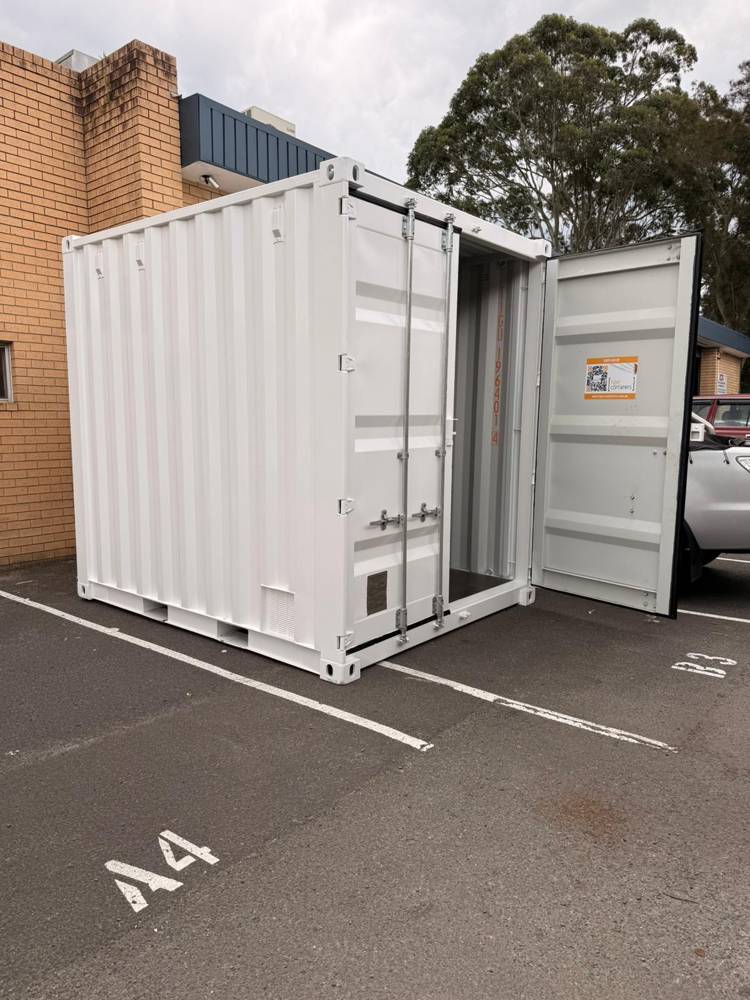
New, unused container, slate grey, fitted with controlled louvres and lifting points. Everything is assembled and tested off site, then delivered complete.
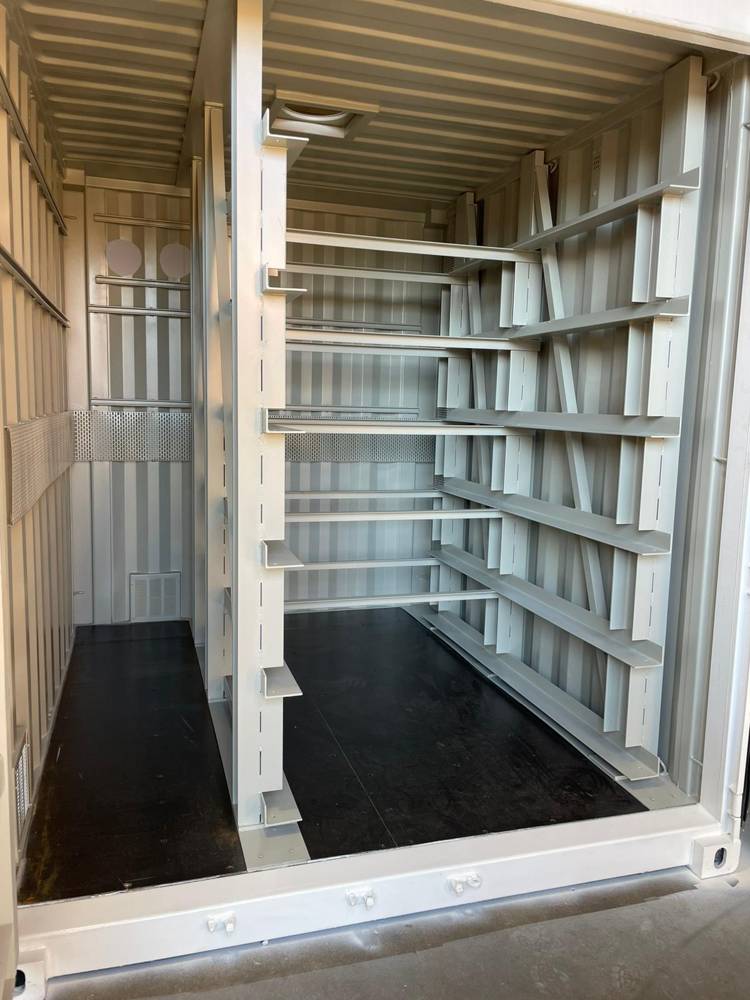
Transport-rated steel frame at 350 mm centres, so packs can be lifted in, swapped or removed under maintenance without disturbing the rest of the plant.
- Source
- Two live multi-tenant sites, NSW
- Period
- March 2026 onward
- Note
- Anonymised. Shapes are representative of measured data.
What the data shows
Sites are sized for conditions that occur a few hours a week.
A power viability audit adds each tenant's maximum load and rounds up. Measured demand tells a different story: the fixed floor dominates, the variable part is smaller than the register suggests, and the peak that drives the connection size is rare. That gap is where deferred upgrades, faster tenant onboarding and viable peak-shaving live.
Avoid the upgrade
Where an audit called for a service and mains upgrade, measured demand and a modest shave can put the same site inside its existing connection. Faster to market, and far cheaper than civil works.
Find stranded capacity
A connection must be sized for its worst phase. On one instrumented site an unloaded phase left roughly a quarter of the connection unusable — recoverable by rebalancing, not by new supply.
See plant failing early
Cooling and rectifier plant change their power signature before they fail. Detectors flag the signature as a reason to look, not as a diagnosis — which is what turns monitoring into maintenance.